da Giulia Finocchi | Ago 2, 2016 | agrobiodiversità, Seminare il cambiamento
State of organic seeds 2016
Organic food should begin with organic seed. Right now most organic farmers rely on seed that isn’t organic. But that’s changing, for the good.
State of Organic Seed is a project of Organic Seed Alliance that monitors the status of organic seed in the US and provides a roadmap for increasing the diversity, quality, and integrity of organic seed available.
Organic farmers produce food differently, and that means they need different seed for the crops they grow: seed developed to thrive without synthetic fertilizers and pesticides, and adapted to their local climate and soil conditions.
(altro…)
da Giulia Finocchi | Ago 2, 2016 | Italia
Con il Decreto del Ministro 30/06/20162015, n. 17713, relativo all’istituzione dell’organo collegiale denominato “Gruppo di lavoro permanente per la protezione delle piante”. Richiesta designazione componenti
(altro…)
da Giulia Finocchi | Ago 1, 2016 | Coltiviamo la diversità!, ECLLD, innovazione, Ricerca azione, ricerca partecipata, Seminare il cambiamento
CERERE – Rinascimento dei cereali in Europa: incorporare la diversità nei sistemi alimentari da agricoltura biologica e a basso input
Grazie alla creazione di una solida rete multi-attore tra le comunità di pratica ed i ricercatori, il progetto CERERE si propone di convalidare, condividere e presentare le migliori pratiche esistenti sull’agrobiodiversità dei cereali e sulla qualità degli alimenti integrandole con i risultati della ricerca.
(altro…)
da Giulia Finocchi | Lug 28, 2016 | agrobiodiversità, Seminare il cambiamento
Dal 26 al 30 Ottobre 2016 a Cluj-Napoca (Romania) ci sarà il secondo Forum Europeo per la Sovranità Alimentare – Nyeleni Europa (in allegato o online qui di seguito l’appello)
http://www.nyelenieurope.net/
Associazione Rurale Italiana, in quanto membro di Via Campesina, ha il compito di organizzare in Italia gli incontri di preparazione al Forum di Ottobre.
da Giulia Finocchi | Lug 28, 2016 | agrobiodiversità, Seminare il cambiamento
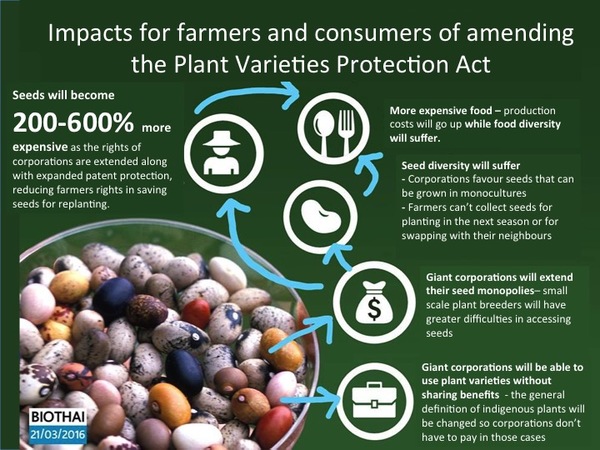
Since 2001, GRAIN has been tracking how so-called free trade agreements (FTAs), negotiated largely in secret, outside the World Trade Organisation (WTO) are being used to go beyond existing international standards on the patenting of life forms. In this report, we provide an update on the FTAs that are legalising corporate theft and threatening farmers’ ability to save, produce and exchange seeds around the world.
vai all’articolo sul sito di GRAIN
Signed in 1994, the WTO agreement on Trade-Related Aspects of Intellectual Property Rights (TRIPS) was the first treaty to impose global standards on intellectual property or legal ownership of plants, animals and microorganisms, bolstered by an enforcement mechanism. Representatives of the US seed and biotech industry brought the issue into the trade talks. Their goal? To ensure that companies like Monsanto, Dow and Pioneer, which spend money on plant breeding to bring new seeds to market, can recoup their investment and make a profit by preventing farmers from re-using those seeds—obligating them to purchase seeds from corporations year after year.
(altro…)