da Giuseppe de Santis | Nov 29, 2017 | Uncategorised
• Horizon 2020: LIVESEED “Improve performance of organic agriculture by boosting organic seed and plant breeding efforts across Europe” (ref. 727230-2) 2017-2021 – LIVESEED aims to improve the performance and competitiveness of the organic sector by boosting organic seed and plant breeding efforts. The main outcome will be an improved breeding efficiency and a greater choice and uptake of organic seed derived from resilient cultivars to optimize organic and low-input agriculture and strengthen sustainable food production in Europe.
• EIP-AGRI at national level: CEREALI RESILIENTI (ref. 67/2016) 2017 € 50.000 – building of an Operational Group to evaluate the feasibility of a local seed company selling cereals populations in the framework of the EU decision n°1681/2014.
• Horizon 2020: CERERE “CEreal REnaissance in Rural Europe: embedding diversity in organic and low-input food systems” (ref. 727848) 2016-2019 – By creating a solid multi-actor network among researchers and communities of practice, and focusing on cereals as cornerstones of European agriculture, culture and diets, CERERE will facilitate exchange and integration of scientific as well as practical knowledge on how to best manage diversity in all steps of cereal food systems, from seed to fork.
• Horizon 2020: DIVERSIFOOD “Embedded crop diversity and networking for local high quality food systems” (ref. 633571) 2015-2019 € – the DIVERSIFOOD project will evaluate and enrich the diversity of cultivated plants (species, inter-varietal and intra-varietal diversity) in agriculture and forestry within agroecosystems so as to increase the performance and resilience of those systems while simultaneously increasing the range and quality of the produce. Using specific, relevant cases, the project will strengthen the “food culture” so as to bring producers scientists, processors, traders and consumers closer together in promoting and using greater diversity of plants and produce with a local and cultural identity.
• Horizon 2020: CAPSELLA “Collective Awareness PlatformS for Environmentally-sound Land management based on data technoLogies and Agrobiodiversity” (ref. 688813) 2015-2018 € – A major sustainability challenge for the European society is moving beyond conventional, industrialised food production and agricultural systems, characterised by a high use of external inputs. Alternative systems with reduced use of external inputs have to be promoted, based on i) an optimised use of agricultural biodiversity (hereafter ‘agrobiodiversity’), ecological processes and natural resources and on ii) improved food systems based e.g. on short supply chain quality food, where consumers play an active role in driving produce demand and consequently offer. CAPSELLA will address this challenge in two ways: (a) raising awareness on these issues especially within and among local communities (smallholders agriculture, biodiversity, food quality) but also within the broader European public, and (b) offering innovative ICT solutions that will address needs and requirements coming from the communities. To achieve this we will use a combination of participatory bottom up data collection and top down data integration to develop solutions for two domains: agrobiodiversity and local food knowledge.
• Italian Ministry of Agriculture MiPAAF/Plant Genetic Resources/FAO Treaty RGV/FAO/RSR “Project Implementation of the FAO Treaty” 2007-2019 – Support for the implementation of ITPGRFA at national level and on the promotion of agricultural goods practices and sustainable use of agro-biodiversity at national and international level.
• Italian Ministry of Agriculture MiPAAF/Plant Genetic Resources/FAO Treaty RGV/FAO/RSR “Pilot project for the activation of a National Registry on cultivated local varieties” 2014-2015
Previous projects
• Lifelong Learning Programme: SEED FARMING “Staff training from experienced local farm mentors for the future of seeds” (2013-1-IT1-LEO03-03791) 2013-2015 – The objectives of the project are to share at European level programs, training arrangements and existing technical resources for the management and use of agricultural biodiversity.
• Lifelong Learning Programme: GROW “Growing agricultural biodiversity: knowledge and practice in Europe” (2013-1-ES1-LE004-71009 4) 2013-2015 – The overall project goal was to preserve the heritage of European cereals, fruits, vegetables through their development and their innovative use in the agro-food sector. In this way, the project was intended to strengthen the competitiveness of farmers and contribute to the nutritional quality of European food.
• Own funds: LCD 2013 “LET’S CULTIVATE DIVERSITY 2nd edition” 12-15 June 2013 Peccioli (PI) ITALY website http://cultivatediversity.org video http://vimeo.com/75470942
• Non-State Actors and Local Authorities in Development: FARMER SEEDS “Good practices in sustainable agriculture and Food sovereignty: developing an inclusive approach in fighting against poverty » (EuropeAid/127765/C/ACT/MULTI/1-165) 2010-2013 . website www.farmerseeds.org
• Lifelong Learning Programme: COLUMELLA “Cultivated Biodiversity and training in Europe » (LLP-LDV-PA-10-IT-279) 2010-2012 – The overall project goal was to preserve the heritage of European cereals, fruits, vegetables through their development and their innovative use in the agro-food sector. In this way, the project was intended to strengthen the competitiveness of farmers and contribute to the nutritional quality of European food.
da Giuseppe de Santis | Nov 29, 2017 | Uncategorised
Rete Semi Rurali (literally “rural seeds network”) is the Italian Farmers’ Seeds Network. It was established in 2007 to strengthen and coordinate the activities of existing associations involved in issues related to seed systems and sustainable agriculture, and as of today consists of 41 members. The commitment of RSR consists in supporting farmers, both at technical and institutional levels, in the creation and dissemination of self-reliant and sustainable organic farming systems. RSR places seeds at the forefront of such commitment, promoting the idea that each soil needs its own seed and that “alternative” agricultural models – such as organic or biodynamic farming – can work only if based on appropriate and specifically adapted varieties.
Through its focus on seeds, RSR promotes a reconnection between a specific territory and agricultural activities, and to this end carries out a research and innovation agenda aimed at restoring and protecting seed biodiversity in close collaboration with farmers, and targeted to their specific agroecological environments and preferences. RSR has accumulated and disseminated valuable experience in methodologies and tools for working with farmers on agricultural biodiversity issues and for assessing and improving local-level seed systems in different European countries.
Routine RSR activities consist of:
• Providing information through a monthly informative newsletter and a periodical magazine, websites (www.semirurali.net; www.semiedintorni.it; www.biocentropertusati.it), meetings and publishing of technical and awareness material;
• Training activities based on knowledge exchange programs among farmers, technicians, researchers at regional, national and international, educational pathways with schools and specific vocational training courses;
• Engaging in advocacy to improve seed laws and related frameworks at national (together with the Ministry of Agriculture and Forestry, the National Board of Elected Seeds (ENSE) and the Regions) and European level (together with the European Coordination Let’s Liberate Diversity! www.liberatediversity.org);
• Supporting the implementation of ITPGRFA-FAO at national level and on the promotion of agricultural good practices and sustainable use of agro-biodiversity at national and international level.
Additional
• The 40 associated organization to RSR have established a long term active collaboration with farmer, producer and consumer networks in local and regional areas:
Antica Terra Gentile
Arco irissrl www.arcoiris.it
Associazione agricoltori e allevatori custodi di Parma
Associazione Arca Biodinamica
AssociazioneItaliana per l’AgricolturaBiologica www.aiab.it
Associazione la Fierucola www.lafierucola.org
Associazione per l’agricoltura biodinamica www.biodinamica.org
Associazione per la Diffusione di Piantefra Amatori
Associazione Rurale Italiana www.assorurale.it
Associazione per la Solidarietà per la Campagna Italiana www.asci-italia.org
Associazione Solidarietà per la Campagna Italiana– Toscana
Associazione Veneta dei Produttori Biologiciwww.aveprobi.org
Centro InternazionaleCrocevia www.croceviaterra.it
Centro SperimentaleAutosviluppo www.domusamigas.it
Civiltà Contadina www.civiltacontadina.it
Coltivare Condividendo www.coltivarcondividendo.blogspot.it
Consorzio della Quarantina www.quarantina.it
Consorzio produttoridellaSolinad’Abruzzo
CoordinamentoToscanoproduttoriBiologici www.ctpb.it
Distretto di Economia SolidaleAltroTirreno
Distretto di Economia solidale della Brianza www.desbri.it
Diversamente Bio www.diversamentebio.it
Geoponika www.geoponika.org
Movimento per l’Autosviluppol’Interscambio e la Solidarietà www.mais.to.it
Parco Nazionale del Gran Sasso e dei Monti dellaLaga www.gransassolagapark.it
Principi Pellegrini Divangazioni www.divangazioni.org
Seminati www.fattoriailrosmarino.it/associazione-seminati
Soffi di terra www.soffiditerra.it
Stazione consortile sperimentale di granicoltura per la Sicilia www.granicoltura.it
Terra! Onlus www.terraonlus.it
Terre e Tradizionisr lwww.terretradizioni.it
World wide opportunities on organic farms www.wwoof.it
Zolle srl www.zolle.it
• RSR works with regional agencies working on research and innovation on agriculture such as ARSIAL (www.arsialweb.it/cms ), ASSAM (www.assam.marche.it ) and CREA, the largest public agency operating in the field of agriculture with 15 centers in Italy.
• RSR is member of the European Coordination Let’s Liberate Diversity! liberatediversity.org.
• In the last years several organizations have set up collective seed banks and exchange seed networks, RSR has experience on methodologies and tools developed for community seed systems in different European countries (as database solutions of some national Network: RSR, RdS, RSP, PSR). It highlighted in several occasions recommendations and reflections to improve the databases based on the on-farm management of biodiversity and the quality of seeds in community-based seed systems. RSR represents also a seed networks including different stakeholders and gives the opportunity to share information on various experiences related to the construction of a network carrying on seed exchange and proposals for improving the functioning and structure of this kind of networks.

da Giuseppe de Santis | Nov 29, 2017 | Progetti Europei
Massimizzare l’uso di sementi bio, specificatamente adattate per l’agricoltura bio!
Un nuovo progetto europeo di ricerca per promuovere le sementi biologiche.
I semi sono le fondamenta dell’agricoltura. Per questo motivo, l’agricoltura biologica dovrebbe essere basata sull’uso di sementi biologiche. L’utilizzo di sementi biologiche costituisce un requisto per la produzione di prodotti alimentari certificati bio: tuttavia sementi convenzionali non trattate, vengono spesso utilizzate in deroga, in molti paesi europei.
(altro…)

da Giuseppe de Santis | Nov 29, 2017 | Progetti Europei
L’agricoltura industriale sta promuovendo una nuova fase basata sull’idea che l’uso di tecnologie e dati permette di incrementare l’efficienza della produzione agricola, migliorando l’uso delle risorse. Le politiche di innovazione a livello europeo e globale promuovono l’applicazione di un approccio high-tech al settore agricolo. Gran parte degli strumenti tecnologici sviluppati per l’agricoltura sono diretti a grandi aziende industriali che possono investire su queste tecnologie.
(altro…)
da Giuseppe de Santis | Nov 29, 2017 | Progetti Italiani
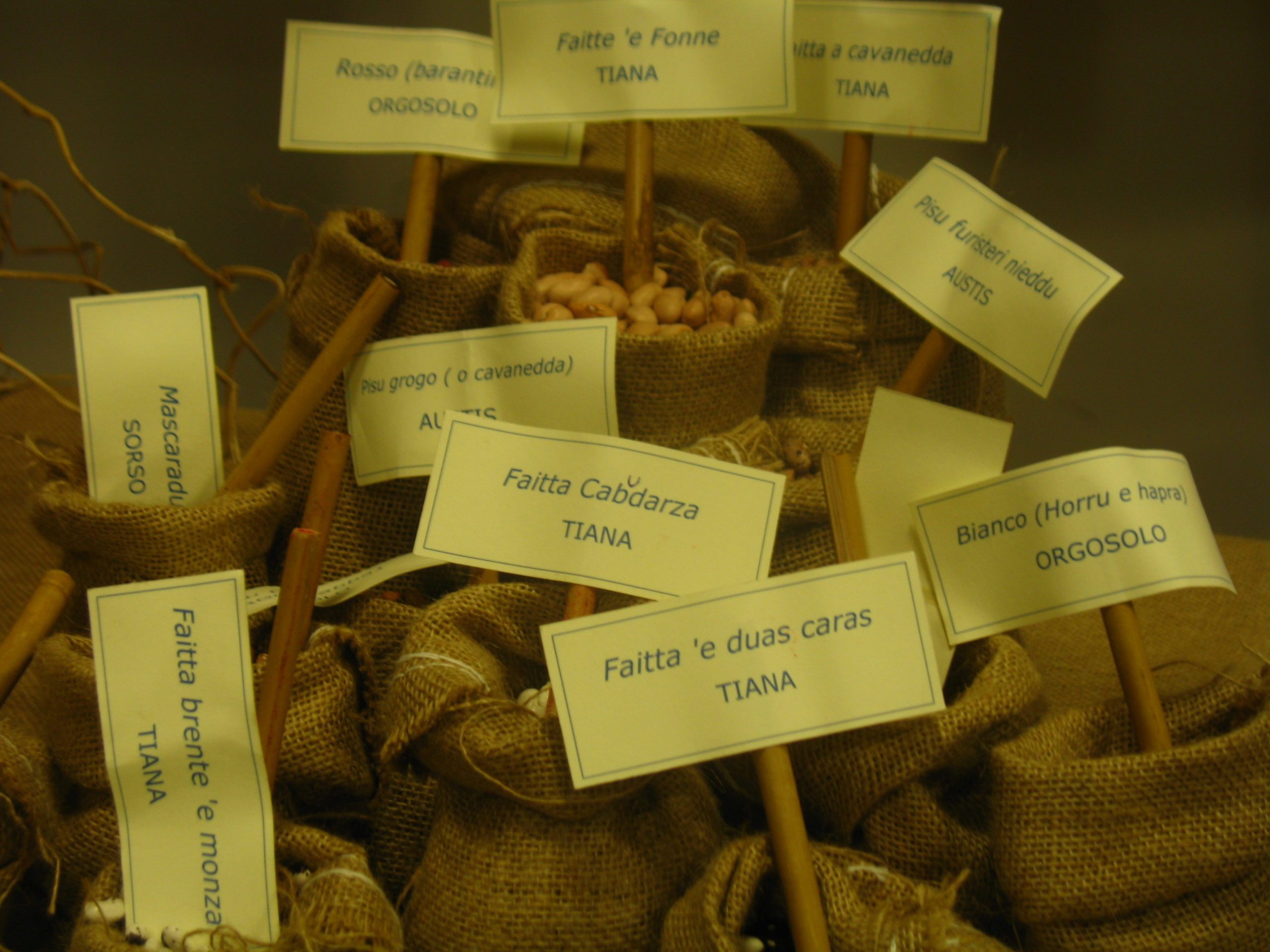
Progetto Risorse Genetiche Vegetali – FAO – MiPAFF – Rete Semi Rurali
RGV/FAO/MiPAAF è l’acronimo con cui indichiamo il progetto finanziato dal Ministero per le politiche agricole, alimentari e forestali volto a implementare in Italia il Trattato internazionale FAO sulle Risorse genetiche vegetali per l’alimentazione e l’agricoltura, quindi di tutto il materiale da riproduzione vegetale: sementi, talee, bulbi, rizomi, tuberi, marze.. Il Trattato FAO contiene articoli dedicati ad accesso, valorizzazione ed equa ripartizione dei benefici derivanti dall’impiego di risorse genetiche vegetali (art. 5); all’uso sostenibile di tali risorse (art. 6); ai diritti degli agricoltori su tali risorse (art. 9).
(altro…)